
The Evolution of the Men's Formal Shirt
From hidden undergarment to the centre of the professional wardrobe: how the men's formal shirt, its collar and its cuffs evolved.
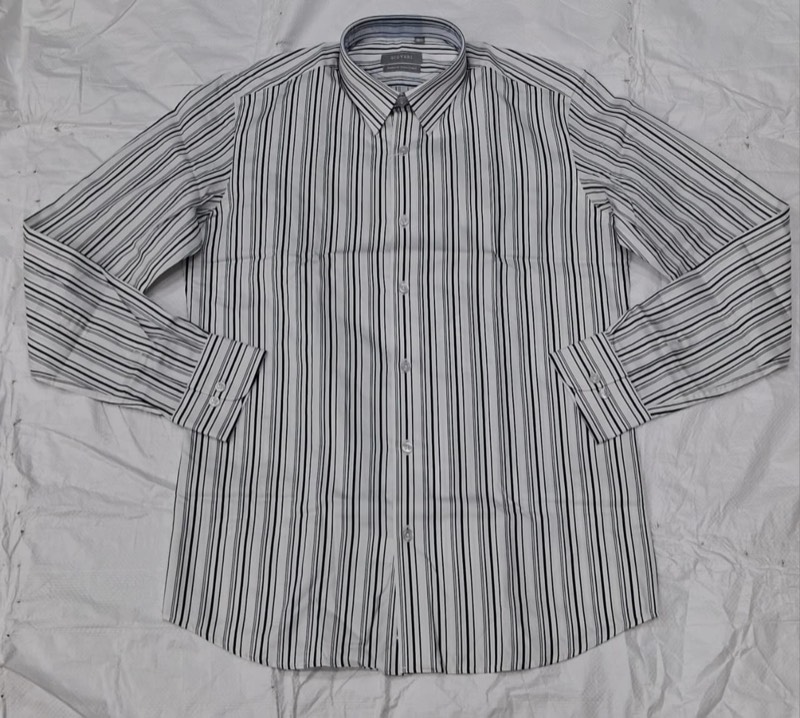
The men's formal shirt looks so settled today that it is easy to forget how much it has changed. For most of its life it was not meant to be seen at all, and many of the details we now take for granted, from the button-through front to the soft attached collar, arrived surprisingly late. Knowing where those details came from makes it much easier to understand why a good shirt is built the way it is, and how to choose one with confidence.
From hidden undergarment to visible signal
For centuries the shirt was underwear. It was the layer worn next to the skin, beneath a doublet, waistcoat or coat, and its job was practical: to absorb sweat and protect the more expensive outer garments, which were rarely washed. Shirts were usually made of linen and pulled on over the head.
Because the shirt sat underneath everything else, the small amount of it that did show, at the neck and wrists, took on a meaning of its own. Clean, bright white linen was hard to maintain. It needed frequent laundering, bleaching and pressing, which in turn required either servants or money. A crisp white collar and cuff therefore told people something about the wearer: that he could afford to stay clean, and that he did not do the kind of work that would soil his clothes. That association between white linen, cleanliness and standing is the distant ancestor of today's white formal shirt, and it explains why white still reads as the most formal choice in a room.
The collar becomes its own object
Through the nineteenth century the collar was often the most fussed-over part of a man's dress, and for a long stretch it was not even attached to the shirt. Detachable collars, closely associated with the town of Troy, New York, which became a centre of collar manufacture, allowed a man to replace the part that got dirty fastest without washing the whole garment. The collar was fastened to the shirt's neckband with studs, and it was usually heavily starched so that it stood stiff and upright.
The detachable collar had clear advantages. A shirt could be worn for longer between washes, a fresh collar could be put on in the middle of the day, and collars could be laundered separately to a higher standard of whiteness and stiffness. The cost was comfort. Starched collars were hard, high and often chafed the neck, which is part of why softer alternatives eventually won out.
Cuffs followed a similar logic. Wrists, like necks, collect grime, and stiff, starched cuffs fastened with links were long part of formal dress. The double or French cuff that some men still wear with cufflinks today is a descendant of that era, kept alive mainly for its sense of occasion.
Buttoning all the way down
Early shirts were pullovers with a short placket at the neck. The coat-style shirt, which opens fully down the front and buttons like a jacket, became common in the late nineteenth and early twentieth centuries and gradually replaced pull-over designs. A shirt that opens fully is easier to put on without disturbing one's hair or a carefully pressed collar, easier to iron flat, and easier to cut closely to the body.
Once the shirt no longer had to be pulled over the shoulders, it could also be shaped more precisely through the chest and waist. The groundwork for the fits we talk about now, explained in our shirt fit guide, was laid by this shift in construction.
Softer collars and a sportier influence
By the early twentieth century, comfort and informality were steadily gaining ground. The button-down collar is generally credited to Brooks Brothers, who adapted the idea from shirts worn by polo players, whose collar points were fastened down so they would not flap in the wind during play. Like many details now considered classic, it began as a relaxed alternative.
Over the 1920s and 1930s, shirts with soft collars attached permanently to the body became the norm for most men. Starched detachable collars lingered in some formal and professional settings, but the attached collar was simply more comfortable and practical. From this point, the shape of the collar, rather than its stiffness, became the main design choice: point, spread and button-down variations each suited different faces, ties and occasions. Our shirt style directory walks through the main collar types that grew out of this period.
New fibres and easy-care shirts
Cotton had long since overtaken linen as the main shirting fibre by the time of the next big change. In the mid-twentieth century, synthetic fibres such as polyester came into wide use, and blends of cotton and synthetics, along with easy-care and wrinkle-resistant finishes, spread quickly. They promised shirts that needed less ironing, dried faster and held their shape through a long day.
These innovations made a neat appearance far easier to achieve, but they involved trade-offs that remain relevant. Heavily synthetic shirts tend to breathe less well than pure cotton, which is noticeable in a humid climate, while a good cotton shirt may need more care but feels cooler and softer against the skin. Most modern shirt buying still revolves around balancing those two priorities, which we discuss in detail in our guide to fabrics, collars and craftsmanship.
The office shirt and the rise of business casual
For much of the twentieth century, the formal shirt was worn under a suit and tie in most offices, and its role was to support the jacket rather than stand on its own. In hot countries, including India, the shirt often did a great deal more of the work. A well-pressed formal shirt with trousers, with or without a tie, has long been a standard form of men's office wear in places where a full suit is impractical for much of the year.
In the 1990s, the idea of "business casual" took hold in offices around the world. Jackets and ties became optional in many workplaces, and the shirt suddenly had to look complete without them. That changed what men looked for: better fit, since nothing was covering the torso; more interesting colours and subtle patterns; and collars that held their shape when worn open. The modern emphasis on slim-fit and tailored-fit formal shirts is a direct response to the shirt becoming the main garment rather than an under-layer.
What this history means when you choose a shirt today
Several of the old lessons still hold, and they can guide the way you pick business shirts now.
- The collar still leads. It was once the most visible part of the shirt, and it remains the part people notice first. A collar that sits cleanly and keeps its shape matters more than almost any other detail.
- White still signals formality. The old link between white linen and status has left white as the most formal shirt colour, with pale blue a close and more forgiving second.
- Fit now carries the look. Because shirts are so often worn without jackets, especially in warm, humid cities like Mumbai, the cut through the shoulders, chest and waist is doing work a jacket used to do.
- Fabric choice is a trade-off, not a rule. Easy-care shirts are convenient for travel and long commutes; breathable cotton is kinder in heat. Many men keep some of each.
- Formality is a sliding scale. Double cuffs and stiff spread collars descend from the most formal end of history; button-down collars from the sporting end. Knowing which is which helps you match the shirt to the occasion.
The formal shirt has moved from hidden undergarment to the centrepiece of men's office wear, and each stage left something behind in the way shirts are cut, finished and worn. If you would like to see how those traditions look in today's shirts, our guide to men's formal shirts is a good next step, and you can explore and try formal shirts in person when you visit Options Mall in Vile Parle West.
The Modern Gentleman's Journal · Options Mall, Vile Parle West, Mumbai