Room V The Fitting Room
V The Fitting Room
The perfect fit: understanding shirt proportions
Fit is the difference between a shirt that is worn and a shirt that wears you. Choose a fit to see its outline, or compare all three at once.
Slim fit
Close through the chest and waist, with a higher armhole and a narrow sleeve.
- Body shape
- Best on slim and athletic frames with little difference between chest and waist.
- Waist shaping
- Pronounced tapering, often with back darts, so no fabric gathers above the belt.
- Chest fit
- Close but never pulling: the placket should lie flat with no X-shaped creases between buttons.
- Sleeves
- Narrow through the upper arm and forearm; the cuff sits neatly at the wrist.
- Styling
- Sharp on its own or under a slim-cut suit. Not ideal for long days if you need room to move.
Tailored fit
A balance between slim and regular — shaped, yet with breathing room.
- Balance
- Gentle tapering from chest to waist without the closeness of slim fit.
- Shoulders & chest
- Shoulder seams sit at the shoulder bone; the chest has enough ease to reach forward comfortably.
- Waist shaping
- Moderate — enough to remove excess fabric, not enough to cling.
- Overall appearance
- Clean under a jacket and composed without one; suits most builds.
- Styling
- The most adaptable choice for office, travel and events alike.
Regular fit
A traditional cut, straight from chest to hem with generous sleeves.
- Proportions
- Fuller through the chest, waist and back, following classic shirt patterns.
- Ease of movement
- Plenty of room to reach, drive, lift and sit for hours.
- Comfort
- Air circulates freely — a genuine advantage in warm, humid weather.
- Professional styling
- Pairs naturally with fuller-cut suit trousers and traditional tailoring; tuck it well to avoid billowing.
- Best for
- Broader builds and anyone who prioritises comfort over a close line.
Slim, tailored and regular side by side
The three fits, compared
Cuts vary between makers, so treat these as tendencies rather than fixed standards. The only reliable test is how a particular shirt sits on you.
| Quality | Slim fit | Tailored fit | Regular fit |
|---|---|---|---|
| Silhouette | Close, clearly shaped | Shaped, relaxed | Straight, generous |
| Chest | Trim | Moderate ease | Full ease |
| Waist | Strong taper, often darted | Moderate taper | Little or no taper |
| Sleeves & armhole | Narrow sleeve, higher armhole | Medium | Fuller sleeve, lower armhole |
| Movement | Least ease | Comfortable | Most ease |
| Suits | Slim and athletic builds | Most builds | Broader builds; comfort-first |
| Looks best | Worn alone or under slim suits | Anywhere | Under traditional tailoring |
An illustrated shirt-fit guide
Seven checkpoints of a well-fitted shirt
- 1
Shoulder seams
The seam should end where your shoulder bone ends. Seams that drop down the arm mean the shirt is too wide; seams riding up towards the neck mean it is too narrow, and the sleeves will pull.
- 2
Collar
Buttoned, the collar should admit one or two fingers. It should not pinch, gape or be pushed into folds by your tie knot, and the points should lie flat against the chest.
- 3
Chest
Reach forward and cross your arms: the fabric should move with you, and the buttons should not strain or open small gaps between them.
- 4
Waist
Tucked in, the shirt should lie smoothly above the belt. A little blousing is natural; folds of fabric spilling over the waistband are not.
- 5
Sleeve length
With arms relaxed at your sides, the sleeve should reach the wrist bone, and stay there when you bend your elbow — not ride halfway up the forearm.
- 6
Cuffs
A cuff should fit snugly enough not to slide over the hand, with room for a watch. Under a jacket, about a centimetre of cuff should show.
- 7
Shirt length
Long enough to stay tucked when you raise your arms or sit down — usually reaching at least the middle of the seat.
In the mirror
Movement, ease and the honest mirror
A shirt that looks perfect while you stand still may not survive a working day. Before deciding, move: raise your arms, reach for an imaginary steering wheel, sit down and stand up again. The shirt should stay tucked, the collar should stay put and nothing should pull across your back.
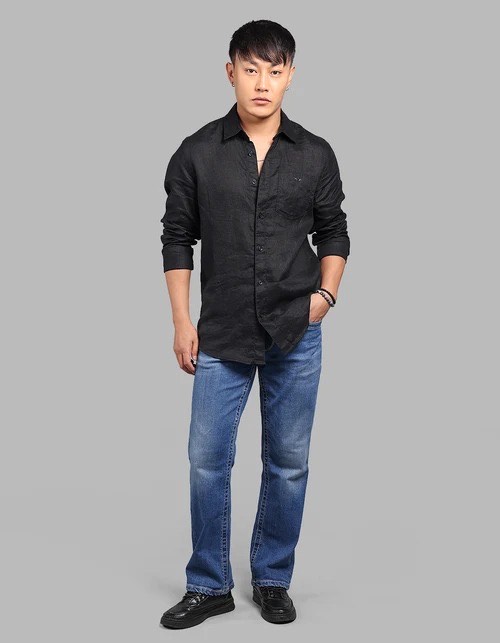
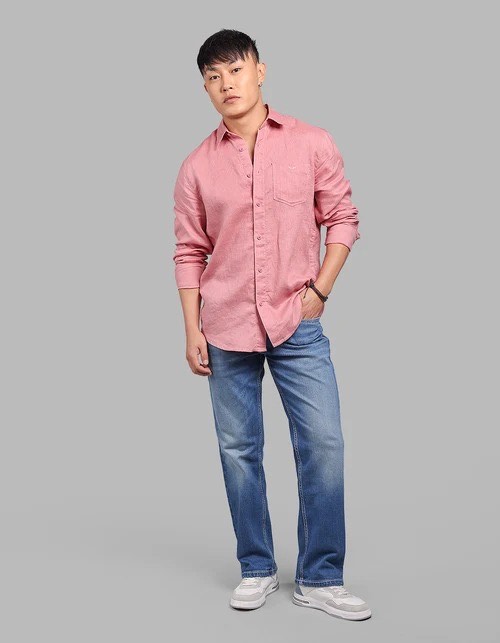
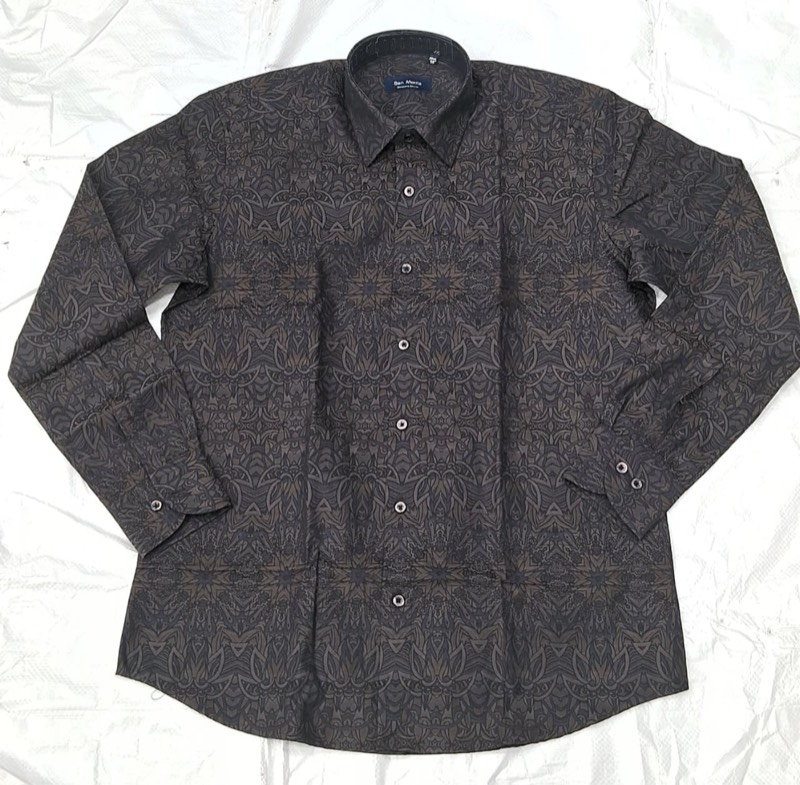
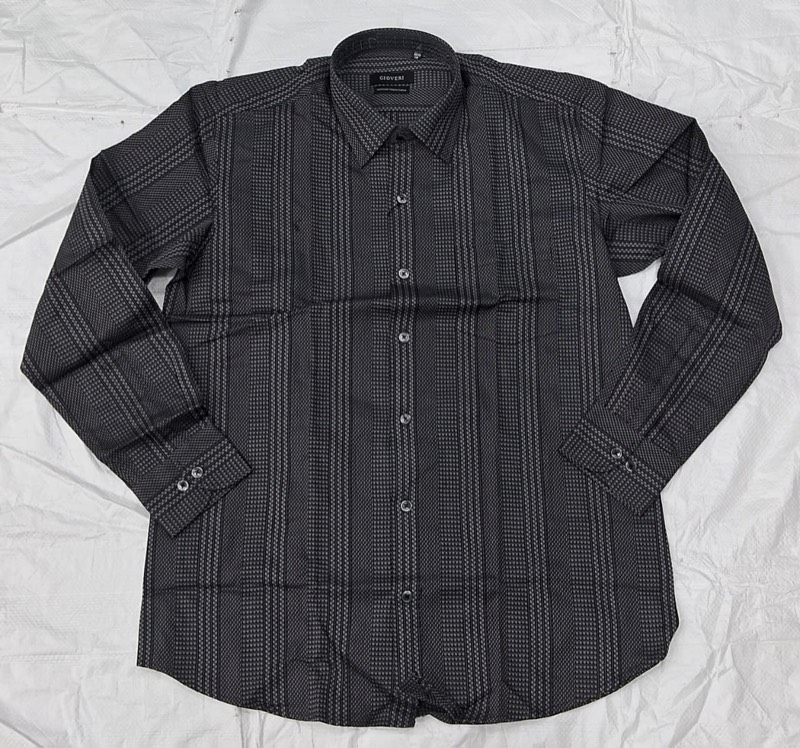
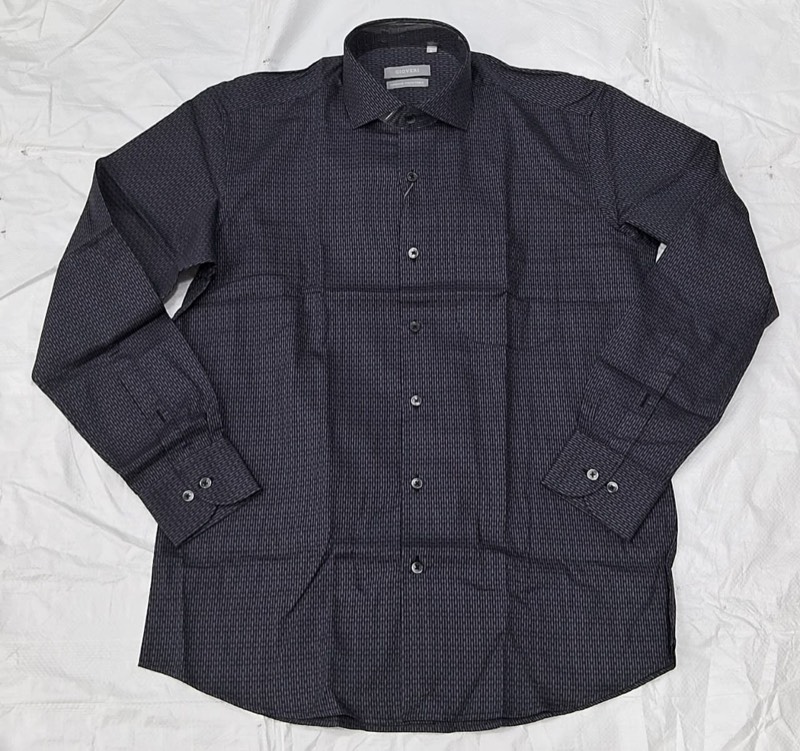
Chest and waist comfort matter especially in a warm climate. A small amount of ease lets air circulate and keeps the fabric from clinging; too much becomes a sail of cloth above the belt. Untucked, as in these photographs, you can read a shirt's proportions clearly — notice where the shoulder seams fall and how the body drapes from chest to hem.
Common shirt-fitting mistakes
Six errors, six corrections
The mistake
Choosing by collar size alone and ignoring the shoulders.
Instead
Check the shoulder seam first; a perfect collar on a shirt with dropped shoulders still looks borrowed.
The mistake
Buying slim fit because it is fashionable, then fighting gaping buttons.
Instead
Try tailored or regular; a shirt that lies flat looks slimmer than one that strains.
The mistake
Sleeves long enough to cover the hand.
Instead
The cuff should stop at the wrist bone so a little shows beyond the jacket sleeve.
The mistake
A shirt too short to stay tucked.
Instead
Raise your arms in the fitting room; the hem should stay below the waistband.
The mistake
Forgetting that cotton can shrink slightly after washing.
Instead
Follow the care label and avoid hot tumble-drying if a shirt fits closely to begin with.
The mistake
Judging fit while standing perfectly still.
Instead
Sit, reach and turn. A shirt is worn in motion.
How to identify a well-proportioned shirt
The fitting-room checklist
Tick each check as you try a shirt on. Nothing is saved or sent anywhere — it is simply a guide for the mirror.
Read the shirt before you wear it
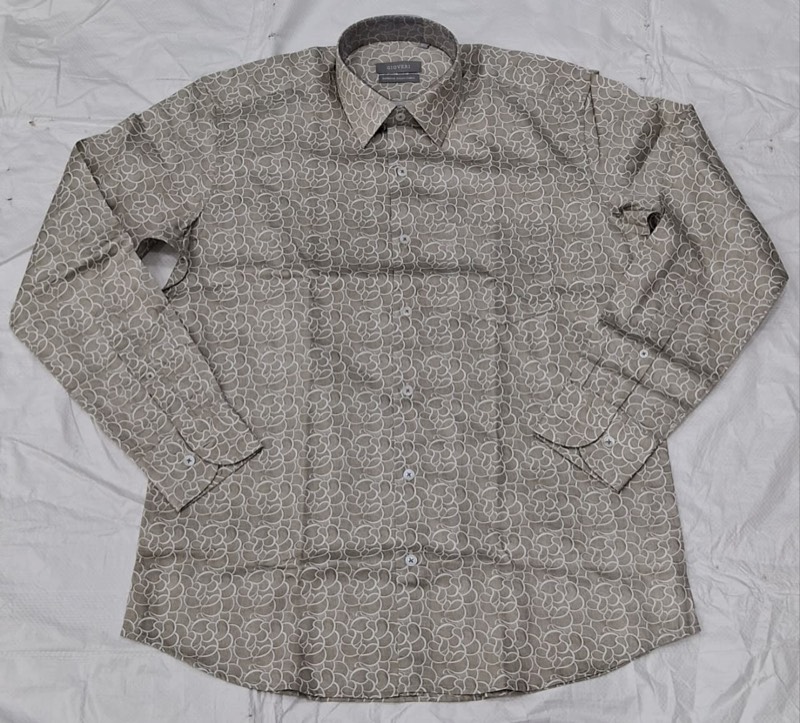
Laid flat, a shirt reveals its cut: the width of the yoke, the taper of the body, the length of the sleeve relative to the torso and the depth of the curved tail.
Continue with Slim Fit vs Regular Fit or the style directory.