
How to Build a Versatile Business Wardrobe
A step-by-step approach to building a business wardrobe of formal shirts, trousers and layers that combine easily.
A versatile business wardrobe is not a large one. It is a small, carefully chosen collection in which almost everything works with almost everything else, so that getting dressed on a busy morning takes a minute rather than a crisis. Building one is less about buying more and more about buying in the right order, with a clear sense of what your working life actually demands.
Begin with an honest look at your week
Before you buy anything, think about how you spend your working days. A lawyer who appears before clients daily needs a different wardrobe from a software engineer who goes into the office twice a week, and both differ from a sales manager who spends half his time on the road. Ask yourself a few plain questions.
- How many days a week do you dress for the office?
- How often do you wear a suit or blazer, and how often a tie?
- Do you meet clients, present to senior colleagues or travel for work?
- Does your workplace lean formal, business casual or somewhere in between?
- How do you get to work: by car, train, auto-rickshaw or on foot?
The answers will tell you where to spend. Someone in a formal office needs more suits and more ties; someone in a relaxed workplace needs more blazers, chinos and shirts that look good without a tie. The professional wardrobe guide discusses how dress expectations vary across different kinds of workplaces.
The foundation: shirts
Shirts are the backbone of men's office wear because they are worn every working day and laundered most often. Plan for enough to cover a full working week plus a couple spare, so that you are never forced to wear something that is still damp or needs ironing. In a humid city, where a shirt may need washing after a single wear, a slightly larger rotation is sensible.
Start with colours that combine with everything. A sound first set of men's formal shirts might look like this:
- Two or three white shirts. The most formal and the most flexible. They work with every suit, every tie and every trouser colour. For more on why, read Why White Formal Shirts Remain a Wardrobe Essential.
- Two or three light blue shirts. Almost as versatile as white, a little softer and easier to wear on everyday days.
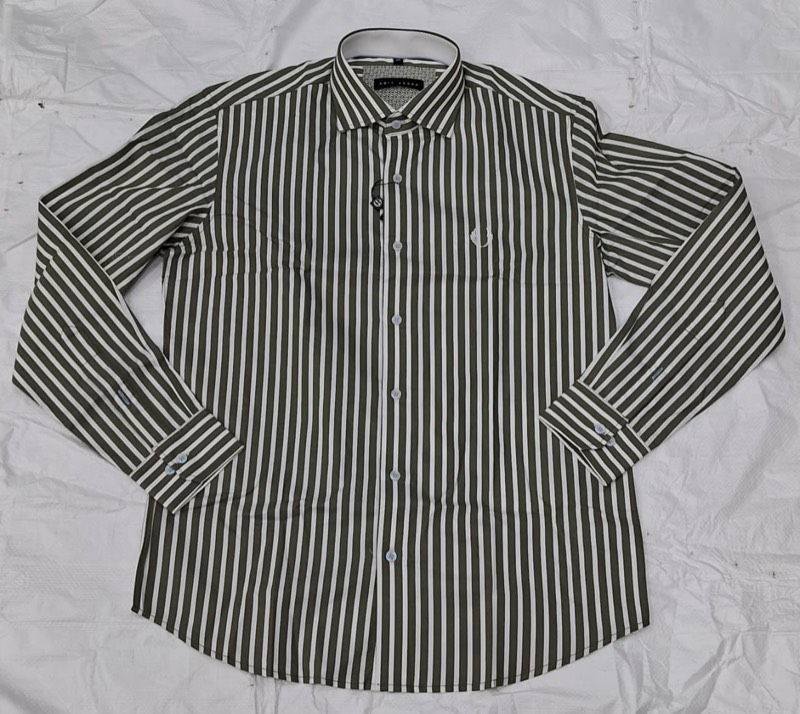
- One or two subtle patterns. A fine blue stripe, a small check or a textured weave adds variety without losing formality.
- One additional colour. Pale pink, lavender or a soft grey, chosen to suit you and your existing ties.
Choose collars with care. A semi-spread collar works with or without a tie and suits most faces, which makes it the most useful default. If your office is relaxed, add a button-down or two. And make sure every shirt fits properly at the collar, shoulders and sleeves; fit does more for your appearance than any amount of expensive fabric.
Trousers, suits and finishing pieces
Trousers and suits
Trousers should be chosen in colours that work with all your shirts. Navy, charcoal and mid-grey are the classic starting points, followed by a beige or stone shade for more relaxed days. A pair in each of navy and grey will go remarkably far.
If you wear suits, start with a navy suit and a charcoal or mid-grey suit. Both are suitable for interviews, client meetings and formal events, and the trousers can often be worn separately with other shirts and blazers. In Mumbai's climate, look for lightweight, breathable cloth rather than heavy wool, and consider whether you will actually wear the jacket on the commute or carry it.
A navy blazer is perhaps the single most versatile piece a business wardrobe can hold. It works over a white shirt and grey trousers for a smart meeting, over a blue oxford and beige chinos for a relaxed Friday, and over a dark shirt for an evening event.
Ties, belts and shoes
Ties. Begin with a few solid or subtly patterned silk ties in navy, burgundy and a muted green or grey. These go with white and blue shirts and with navy and grey suits. Add patterned or brighter ties later, once the basics are covered.
Shoes. A pair of black oxfords is the most formal choice and suits interviews and serious meetings. A pair of dark brown shoes, whether oxfords, derbies or loafers, covers most other days. Keep both polished and in good repair; worn or scuffed shoes undermine an otherwise sharp outfit.
Belts. Match the belt to your shoes: a black belt with black shoes, a brown belt with brown shoes. A simple, slim buckle looks best with business shirts and suits.
The gentleman's style guide explains in more depth how to coordinate shirts, trousers, ties and shoes so they work together.
Adapting to climate and commuting
In Mumbai the weather shapes the wardrobe as much as the dress code does. Breathable cottons in poplin, twill or end-on-end weaves are more comfortable than heavy fabrics or high-polyester blends. During the monsoon, darker trousers hide splashes, and fabrics that dry quickly are worth having. A lightweight undershirt can help absorb perspiration and keep a white shirt looking fresh.
Air-conditioned offices create the opposite problem: you may feel chilly indoors after sweating outside. A light blazer or knit layer that you can leave at the office or carry in a bag solves this neatly. If you commute by train, consider keeping a spare shirt at your desk for days when the journey is harder than expected.
Planning for special occasions
Working life brings its own occasions: interviews, important presentations, conferences, award evenings and festive office gatherings around Diwali or the year's end. A versatile wardrobe should cover these without a last-minute shopping trip.
- Interviews and presentations: navy or charcoal suit, white or light blue shirt, a conservative tie, polished black shoes.
- Business travel: crease-resistant shirts, one suit or blazer, two pairs of trousers and one pair of shoes that suits both.
- Office celebrations: a richer shirt colour or a band collar shirt under a bandhgala or Nehru-style jacket, with dark trousers.
- Evening dinners with clients: a dark suit with a crisp white or pale shirt; the tie optional depending on the setting.
For more ideas, the occasion formal shirts guide covers shirts for interviews, dinners and celebrations.
Building over time
The best wardrobes are built slowly. Rather than buying everything at once, add pieces as gaps appear. A useful order of priority is:
- Shirts that fit well in white and light blue.
- Navy and grey trousers.
- Black and brown shoes, with matching belts.
- A navy suit or blazer.
- A few classic ties.
- A second suit, additional shirt colours and patterns, and seasonal pieces.
Replace items as they wear out, rather than all at once, and note what you actually reach for. If a shirt or tie has not been worn in months, it is not earning its place; let it go and buy something you will use.
The payoff
A versatile business wardrobe saves time, money and stress. It lets you dress well every day without thinking too hard, and it means you are always prepared for the unexpected meeting or invitation. Start with shirts, keep colours simple and invest in fit. If you would like to try different fits and colours together before committing, visit Options Mall in Vile Parle West and see how a few pieces combine.
The Modern Gentleman's Journal · Options Mall, Vile Parle West, Mumbai